
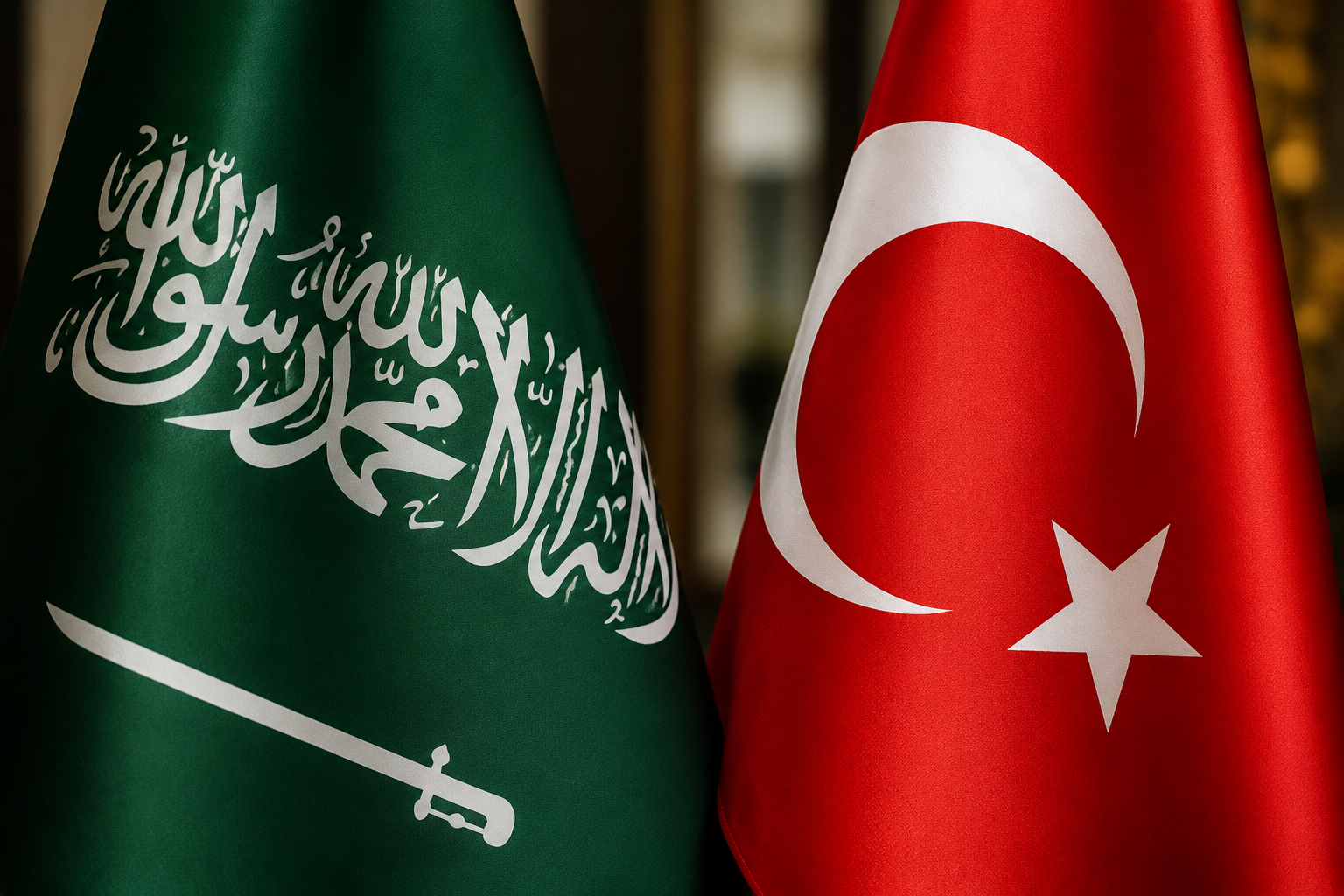
Could The Revival of 100-Year Old Saudi-Turkish Hejaz Railway Bypass Hormuz?
By launching a railway corridor stretching from Mecca to Istanbul via Amman and Damascus, with potential extensions to Oman and Lebanon, Saudi Arabia and Turkey could diversify their economies and expand their geopolitical influence.
But while an integrated rail network could reshape regional trade, at a time when the vulnerabilities of the Strait of Hormuz have become obvious, fully replacing the strategic waterway remains unlikely.
Gaining momentum after two agreements were signed by the Turkish Transport Minister Abdul Kadir Uraloglu and Saudi Saleh bin Nasir Al Jasser in early June, the initiative is to be implemented by the Turkiye State Railways and the Saudi Arabian Railways.

Where Are US-Saudi Defence Ties Heading?
The United States and Saudi Arabia have resumed defence talks, which started just days after Riyadh had hosted US and Russian officials to discuss the two countries' diplomatic relations and the Ukraine war, showcasing the Kingdom’s role as an international mediator and its valued status as a major US ally.
Accompanied by top-level delegations, the Saudi Defence Minister Prince Khalid bin Salman and US Defence Secretary Pete Hegseth held extensive consultations for enhancing strategic ties. Emphasising the crucial nature of Saudi-US cooperation, Prince Khalid said that living in a “turbulent region” makes it necessary to coordinate bilateral efforts to “ensure stability in the region and the world.”
Considering the various concerned players and a highly complex political and security situation in the Middle East, InStrat Nonresident Fellow Sabena Siddiqui explores for The New Arab where these talks may be heading, towards a deeper strategic alliance, or indeed a purely interest-driven partnership.