

Where Are US-Saudi Defence Ties Heading?
The United States and Saudi Arabia have resumed defence talks, which started just days after Riyadh had hosted US and Russian officials to discuss the two countries' diplomatic relations and the Ukraine war, showcasing the Kingdom’s role as an international mediator and its valued status as a major US ally.
Accompanied by top-level delegations, the Saudi Defence Minister Prince Khalid bin Salman and US Defence Secretary Pete Hegseth held extensive consultations for enhancing strategic ties. Emphasising the crucial nature of Saudi-US cooperation, Prince Khalid said that living in a “turbulent region” makes it necessary to coordinate bilateral efforts to “ensure stability in the region and the world.”
Considering the various concerned players and a highly complex political and security situation in the Middle East, InStrat Nonresident Fellow Sabena Siddiqui explores for The New Arab where these talks may be heading, towards a deeper strategic alliance, or indeed a purely interest-driven partnership.

AI’s Industrial Transformation in Qatar: Predictive Maintenance
Artificial Intelligence is transforming the world’s industries, including in the Arabian Gulf state Qatar. The countries embrace of AI-powered predictive maintenance is set to revolutionize the energy and industrial sectors at home and potentially abroad. From reducing downtime to boosting sustainability, AI is positioning Qatar as a global leader in innovation.

Making Plans for Nigel (…Farage)
Besides renegotiating trading terms with the European Union and freeing the UK from the World Economic Forum and other ‘globalist’ organizations, Reform’s ‘contract’ lacks a clear and coherent foreign policy. This is hardly surprising given populism’s dependence on ‘me first’ narratives. It nevertheless raises questions as to how a Farage premiership will conduct itself on the international stage, particularly with countries that have traditionally factored the UK into their foreign policy calculations.
These include the Gulf Cooperation Council (GCC) states, home to significant expat British populations and business interests. While deciphering a Farage-inspired foreign policy is not an immediate priority, the UK’s fractious political landscape suggests that it is better for GCC to be prepared.

Qatar, The Diplomatic Powerhouse Leading Global Peace Efforts in Afghanistan
As the third Doha meeting on Afghanistan concludes, it is evident that Qatar's leadership in international mediation is indispensable. This United Nations-convened event, which gathered representatives from over 30 countries and international organizations, underscored Qatar's critical role in fostering dialogue and seeking solutions to some of the world's most pressing issues. “In Doha, we have a unique opportunity to forge a path forward for Afghanistan,” remarked Qatar’s Minister of State in its Foreign Ministry, HE Dr. Mohammed bin Abdulaziz bin Saleh Al Khulaifi, highlighting the gravity of the discussions.

What's Behind Taliban's Decision to Attend UN Conference in Qatar?
Qatar — which is playing a crucial role in engaging with the Taliban and providing them with a meeting place to negotiate with global powers — took on a difficult task considering its relatively small size in the Gulf Cooperation Council. But the effort has paid dividends, with Doha building solid diplomatic credentials at regional and global levels by connecting Afghanistan to third parties.

What Happens in Georgia Matters to the Gulf
Tens of thousands of ordinary Georgians continue to protest the reintroduction of the controversial “foreign influence” bill. Backed by the governing Georgian Dream party, the legislation requires media and non-governmental organizations receiving more than 20% funding from abroad to register as an organization "pursuing the interests of a foreign power". Critics have branded the bill the “Russian law”, warning that similar legislation has been used there to quieten free speech and crackdown on dissent.

Britain’s Upcoming General Election: What it Might Mean for the GCC
Like many parts of the world, the Gulf Cooperation Council (GCC) has more than a passing interest in the current state and future trajectory of British politics. For year ending March 2023, trade between the United Kingdom and GCC countries amounted to £65.2 billion, making the Gulf region the UK’s seventh-largest export market. A UK government report also highlights that GCC Foreign Direct Investment (FDI) holdings in the country amounted to £15.7 billion in 2020. Close economic ties are complemented by positive diplomatic relations and a large expat British workforce in many GCC states.
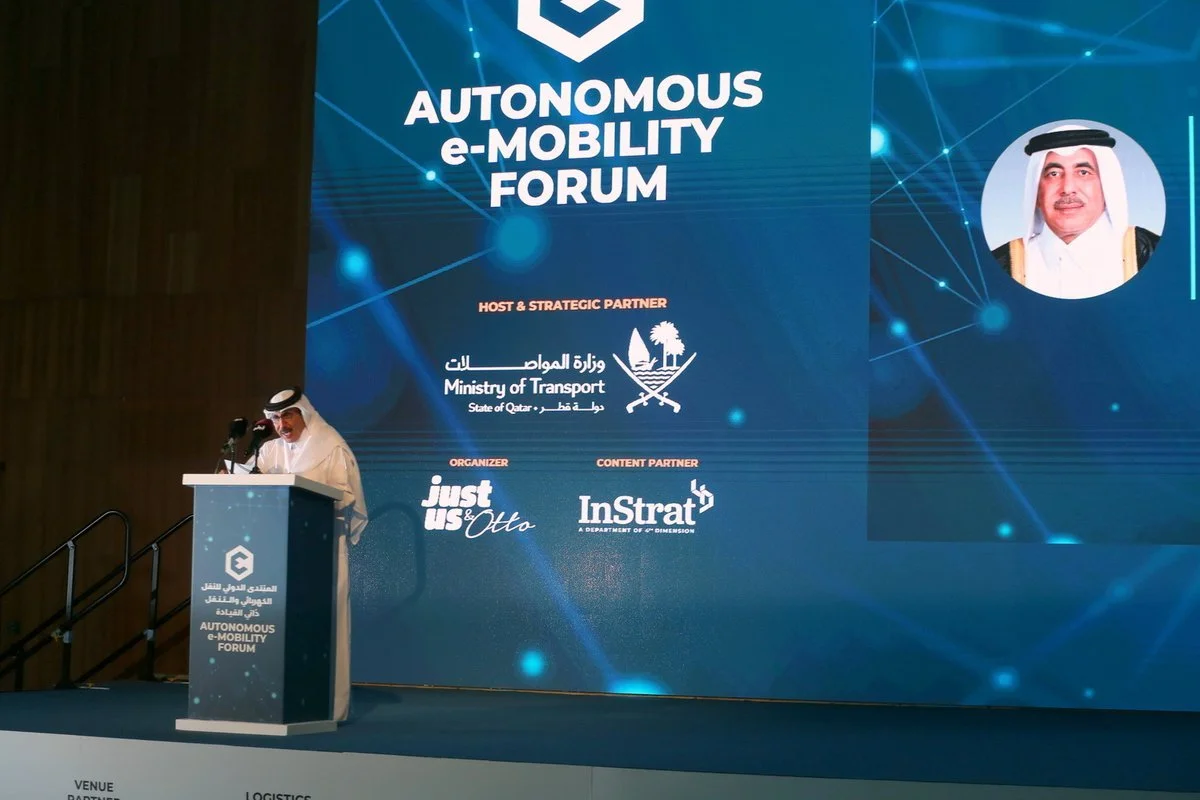
Minister of Transport Inaugurates International Autonomous e-Mobility Forum
Doha, Qatar: Minister of Transport HE Jassim bin Saif Al Sulaiti inaugurated the Autonomous e-Mobility Forum on Tuesday, hosted by the Ministry of Transport at the Qatar National Convention Center (QNCC) for two days.
The opening ceremony was attended by a number of Their Excellencies Ministers, high-profile state officials, and chairpersons of entities working in the transportation industry.
In his opening speech, HE Minister of Transport stressed that Qatar, under the wise leadership of HH the Amir Sheikh Tamim bin Hamad Al-Thani, will continue developing a coherent, sustainable, integrated, and eco-friendly transportation system in a fashion that enhances the country’s leading position on the world map of green and smart transportation, in addition to sharing its expertise in the field with the rest of the world through its real-life experiences of hosting major continental and international events, where transportation is a key success factor.

Region’s Affinity to Technology and Innovation is Key
Earlier this year, H E Lothar Freischlader, Germany’s Ambassador to the State of Qatar and Thomas Triller, Deputy Head of Mission responsible for economic affairs, met for a talk with representatives of the Autonomous e-Mobility Forum’s Executive Committee. Providing the perspective of a leading technology exporter and traditional automotive nation, the diplomats shared their observations and views on Qatar’s trajectory as a hub for dialogue, Qatari-German relations, global collaboration for a common good, and the potentials of autonomous e-mobility going forward. The German embassy indeed is the first diplomatic representation in Doha to utilize an electric vehicle as a staff car.

Can Innovation Diplomacy End the Climate Gamble?
With today’s global challenges urging equally global responses, an overlooked subset of diplomacy emerges as potentially pivotal: innovation diplomacy, a discipline related to the overarching concept of science diplomacy. Characterized by particularly collaborative prerequisites, science diplomacy, though lacking a precise definition, is usually understood across three dimensions, which could work similarly for innovation diplomacy:

Will Gaza Impact the British General Election?
An estimated 130,000 British citizens currently live and work in the Gulf Cooperation Council states. Many of these will observe and indeed vote in their home country’s general election, which is widely expected to take place later this year. Like their compatriots, a variety of factors will ultimately determine for which party they will cast their vote, including the ongoing Gaza crisis. Writing for the UAE’s Khaleej Times, InStrat’s Adam Dempsey nevertheless explains why Gaza is unlikely to significantly impact the outcome of the UK’s next general election.

Evolution and Prospects of Smart Mobility
As we approach the upcoming Autonomous e-Mobility Forum in Qatar, it’s timely to assess our current status in smart mobility and the hurdles that await us.
The connected, autonomous, shared, and electric vehicles (CASE) mobility framework has been our guidepost for over a decade, providing insights into the most significant opportunities and predicting developments within these domains. With the Autonomous e-Mobility Forum on the horizon, what is our progress report, and what challenges remain unresolved in these critical areas of mobility?

Food Waste in the Gulf States
According to the UN Environment Program, global food waste is the third-largest greenhouse gas emitter, just behind China and the US. Food waste today generates 8-10% of global greenhouse gas emissions, directly adding to the issue of climate change.
Apart from leftover food emitting methane, this takes into account the energy used for growing, processing, transporting, and packaging food products for a global market. Consequently, food waste and food systems are among the most important challenges discussed at this year's UN Climate Change Conference, COP28 UAE.
Some 1.3 billion tons of edible food are being thrown away every year, due to inefficient production methods and limited access to technology (food loss) on the one hand, and wasteful consumer habits (food waste) on the other. In the GCC, food amounting to 10 million tons is wasted every year.

GCC States Focused on Both Oil, Green Energy at COP27
As the United Nations Climate Summit COP27 has come to a close in Egypt’s Sharm el-Sheikh, the conference’s key aim of ensuring full adherence to the Paris Agreement is unlikely to be fulfilled. Since last year’s COP26 in Glasgow, Scotland, ‘only 29 out of 194 countries came forward with tightened national plans,’ a UN press release stated.
Yet, while most members are making some efforts to cap climate change, the Gulf Cooperation states have focused on the need for a two-pronged approach to climate — focusing on both oil and green energy — amid rising energy demand following the war in Ukraine and the nations’ reliance on energy exports as a mainstay of their economics.