Qatar Drives Dialogue and Innovation in Driverless e-Mobility
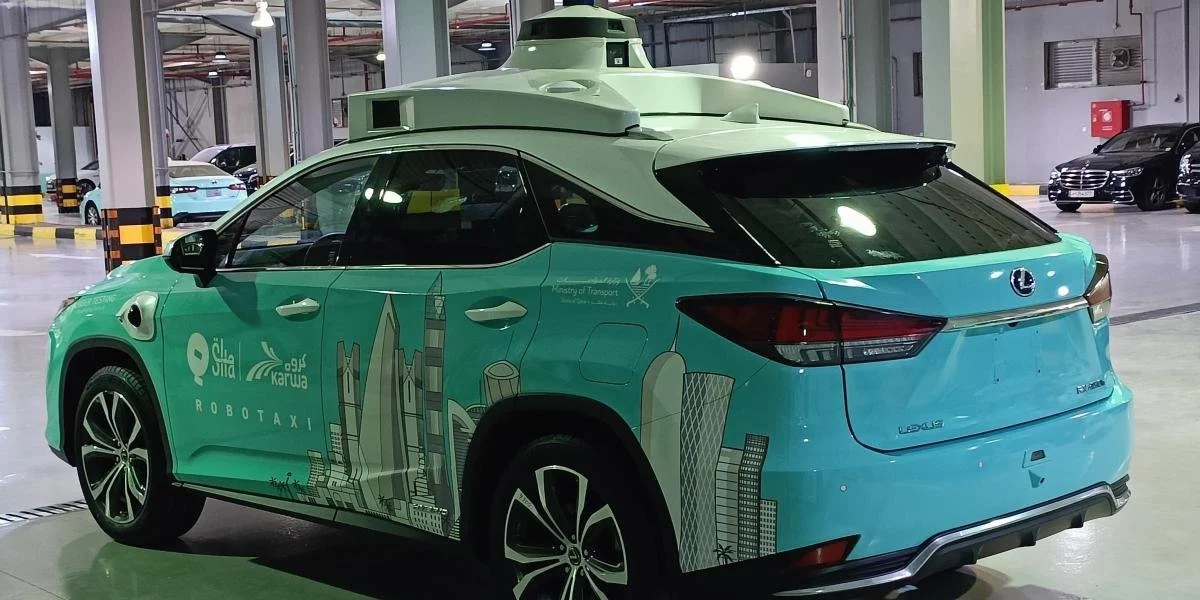
The Ministry of Transport is set to oversee a test run by Mowasalat (Karwa) of level-4 electric robotaxis in specific areas in Qatar, primarily on tourist and services routes.
Set to host the Autonomous e-Mobility Forum in Doha this September, Qatar continues to get ready for showcasing the latest in and around sustainable transport innovation, while gaining expertise from an array of reputed international experts and industry leaders to attend the sessions.
The original event date was moved from April to September 2026, yet, notwithstanding the ongoing situation in the Middle East, the country maintains focus on its long-term aims in technology, innovation, and smart mobility, independent from how the coming time will unfold.
Featuring discussions on Autonomous Vehicle (AV) technology, electric mobility, AI-driven traffic and digital infrastructure, this would already be Doha’s second edition of the Forum. The first was held in May 2024.
With the efficient implementation of its national Autonomous Vehicle Strategy, Qatar could in fact integrate driverless and electric technologies into tomorrow’s everyday mobility and future smart-city frameworks. Launched in 2023, the five-year plan aims to establish a sustainable smart mobility eco-system, including AI and 5G enhancement, by 2030.
A high-value market
According to a report by Strategy & Middle East, part of the PwC network, the global market for fully autonomous vehicles could reach USD 182 billion by 2035, generating nearly USD 19 billion in the GCC region alone.
Driverless technology is already embedded in some of the GCC’s most ambitious projects, such as Saudi Arabia’s NEOM and the UAE’s smart city initiatives. From dedicated autonomous lanes to new urban mobility hubs, driverless vehicles will be a defining feature of new modern urban environments rather than retrofitted legacy cities.
In line with the economic diversification plans of most Gulf Cooperation Council (GCC) nations under their long-term national visions, e-mobility will soon be reshaping urban transport networks with robotaxis, roboshuttles, robobuses, and electric passenger drones, gradually being brought from pilot projects into the mainstream across the Gulf region.
Robotaxis
Expected to be the largest segment of Fully Autonomous Vehicles (FAVs), robotaxis could create a USD 10 billion market in the GCC by 2035, representing around 18 percent of the anticipated global market share. In this field, Qatar has already moved from prototypes to public trials of Level-4 electric robotaxis.
After months of tests involving government personnel, Mowasalat, Qatar’s national transportation service provider, made self-driving taxis available to selected members of the public at the Old Doha Port last month.
At Level 4, autonomous vehicles can operate completely autonomously under specific conditions, without the involvement of humans. The turquoise Lexus RX 450 robotaxis are equipped with 11 smart cameras, four LiDAR sensors for precise depth detection, as well as four radars to monitor surrounding traffic speeds.
A key pillar of Qatar’s Autonomous Vehicles Strategy, after familiarizing the public with driverless systems at selected tourist and service areas, Mowasalat would integrate the fleet into their ride-hailing app, rolling out robotaxis more broadly in the final phase.
Utilizing the AI component further, autonomous electric bus trials have also been held in Qatar. As per projections by PwC, the robotaxis and shuttles sector will be worth around USD 1 billion by 2035, leveraging the country’s urban density, high GDP per capita, and 5G infrastructure.
Challenges and benefits
Strategy & Middle East argues that the GCC already enjoys a “unique edge in autonomous mobility” thanks to its “stronger investment capacity, easier licensing pathways, and unrivalled testing grounds in its giga-projects.” The real challenge, however, lies in “real-world deployment,” as this requires “infrastructure readiness and smart incentives,” not just innovative technologies.
Regulation remains another critical factor in the e-mobility sector. Adam Dempsey, a senior analyst at the knowledge platform InStrat, notes that, “in the absence of fully-fledged international frameworks, it is largely left to states and regional organizations to regulate autonomous e-mobility.” In turn, he says, this creates a “patchwork of laws and best practices within a sector where accessibility, safety, and sustainability should be of paramount importance.”
With Qatar’s interest in autonomous e-mobile platforms growing fast, Dempsey suggests, the country has an opportunity to enact legislation that “locks these key requirements in, while also using its diplomatic nous to make the case for an international one-size-fits-all model.”
Innovation Diplomacy
Discussing Qatar’s engagement in the AV sector, InStrat’s Khristo Ayad highlights that because “Qatar and other dynamic GCC states are not traditional automotive manufacturing powers, they are uniquely well-positioned to provide convening platforms, free of entrenched commercial or political rivalries, that innovation diplomacy needs to produce real results.”
According to Ayad, “an important thought for hosting the Autonomous e-Mobility Forum in Qatar, was that the country offered an “ideal physical and societal testing ground for driverless electric vehicles,” particularly as it advances its “determined ambition” to become a “hub for innovation and hypermodern smart cities technology.”
Observing that while Qatar has “rightfully received” much positive attention for its diplomatic efforts around various geopolitical hotspots, Ayad contends that the Forum could “decisively support another level of dialogue, one that quite possibly helps to solve a big part of today’s looming climate emergency.”
Soft Power
Beyond technology, autonomous mobility could increasingly form part of Qatar’s broader soft power portfolio. The push into driverless and electric transport reinforces its image as a forward-looking, innovation-driven nation, attracting partners, talent and investment beyond just hydrocarbons.
By hosting events like the Autonomous e-Mobility Forum, Qatar solidifies its position at the center of global sustainable mobility conversations, fostering positive ties and knowledge-exchange amongst policymakers, innovators, and technology firms from otherwise quite possibly competing nations.
Comparable to other regional initiatives such as the UAE’s Mars mission or Dubai’s smart-city branding, leadership in autonomous e-mobility could become a pillar of Doha’s innovation diplomacy. Just as global sporting events amplified Qatar’s visibility, mobility innovation offers a quieter, yet potentially more durable, area of impact.
Other high-profile Gulf platforms such as Web Summit Qatar and LEAP have become powerful draws for global investors and policymakers, and the Autonomous e-Mobility Forum has the potential to further elevate Qatar’s profile in this space.
Regardless, if successfully implemented, autonomous transport will not only reshape Qatar’s streets. It may also shape emerging regulatory norms and cross-border standards in one of the most transformative sectors of the coming decades.
This piece was first published by NE Global.