
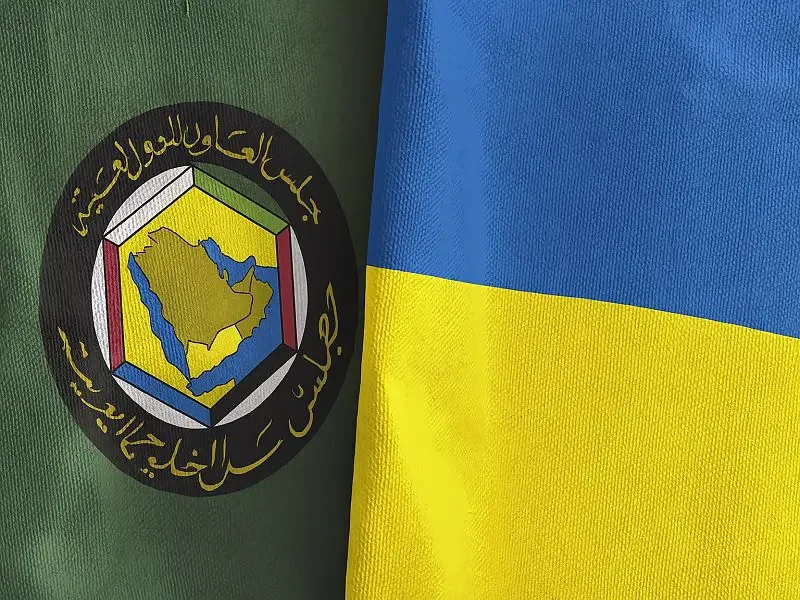
Defence, Drones, Diplomacy: Ukraine and the GCC
Ukraine’s most recent defence cooperation agreements with Gulf Cooperation Council (GCC) and other Middle Eastern states point to a subtle but possibly important shift in global security dynamics. Drawing on its meanwhile four-year-old conflict with Russia, Kyiv’s recent diplomatic efforts have added an unexpected European dimension to the current crisis in the Gulf region, perhaps reshaping local responses to Iranian missile and unmanned aerial vehicle (UAV) attacks.
Relying on layered air defense systems such as THAAD and Patriot, along with fighter jets, the Gulf states have coped very well with the targeting of assets and infrastructure on their territories. But with supplies of expensive and finite interceptors potentially running low in the future, some may have looked to Ukraine to replenish stocks.

Qatar and the United States: A Diplomatic Friendship for the Modern Age
Tucker Carlson’s sit-down with Sheikh Mohammed bin Abdulrahman Al-Thani—Prime Minister and Minister of Foreign Affairs of Qatar—set off the usual flurry of reactions. Some saw it for what it was: an illuminating conversation about geopolitics, diplomacy, and the U.S.-Qatar alliance. Others, as is customary, seized the opportunity to distort, misrepresent, and bemoan things they don’t fully understand.
Let’s be clear: if this interview made anything obvious, it’s that many so-called experts still don’t grasp the basic mechanics of diplomacy.
One fact emerged from this discussion with the clarity of a Supreme Court ruling: Qatar’s strategic partnership with the United States isn’t happenstance—it is the product of decades of cooperation.

Where Are US-Saudi Defence Ties Heading?
The United States and Saudi Arabia have resumed defence talks, which started just days after Riyadh had hosted US and Russian officials to discuss the two countries' diplomatic relations and the Ukraine war, showcasing the Kingdom’s role as an international mediator and its valued status as a major US ally.
Accompanied by top-level delegations, the Saudi Defence Minister Prince Khalid bin Salman and US Defence Secretary Pete Hegseth held extensive consultations for enhancing strategic ties. Emphasising the crucial nature of Saudi-US cooperation, Prince Khalid said that living in a “turbulent region” makes it necessary to coordinate bilateral efforts to “ensure stability in the region and the world.”
Considering the various concerned players and a highly complex political and security situation in the Middle East, InStrat Nonresident Fellow Sabena Siddiqui explores for The New Arab where these talks may be heading, towards a deeper strategic alliance, or indeed a purely interest-driven partnership.